Blog
How to Store Research Peptides Properly for Maximum Stability
Jun
Best Practices for Maintaining Peptide Integrity in Laboratory Settings
Research peptides are highly specialized compounds that require careful handling and storage to maintain their integrity over time. Whether used in academic laboratories, biotechnology facilities, or pharmaceutical research environments, proper storage practices play a critical role in preserving peptide quality and ensuring consistent research results.
Improper storage can expose peptides to moisture, heat, light, and contamination, all of which may reduce stability and compromise experimental reliability. Understanding how to store research peptides correctly helps researchers protect their investment while supporting reproducible scientific outcomes.
In this guide, we’ll explore the best practices for storing research peptides and explain why proper handling is essential for long-term stability.
Why Proper Storage Matters
Peptides are composed of amino acids linked together by peptide bonds. Although these molecular structures are carefully synthesized and purified, they can be sensitive to environmental conditions if not handled appropriately.
Factors such as temperature fluctuations, humidity, oxidation, and repeated handling may gradually affect peptide stability. Maintaining optimal storage conditions helps preserve molecular integrity and supports consistent laboratory performance throughout the product’s intended lifespan.
Good storage practices are an important part of maintaining high laboratory standards and protecting valuable research materials.
Understanding Lyophilized Peptides
Many research peptides are supplied in lyophilized (freeze-dried) form, a process that removes water while preserving molecular structure.
Lyophilization offers several advantages, including:
- Improved long-term stability
- Easier transportation
- Reduced risk of degradation during storage
- Greater flexibility for laboratory preparation
Because moisture has been removed, lyophilized peptides are generally more stable than liquid solutions when stored under appropriate conditions.
For this reason, many laboratories prefer freeze-dried peptides until they are ready for research applications.
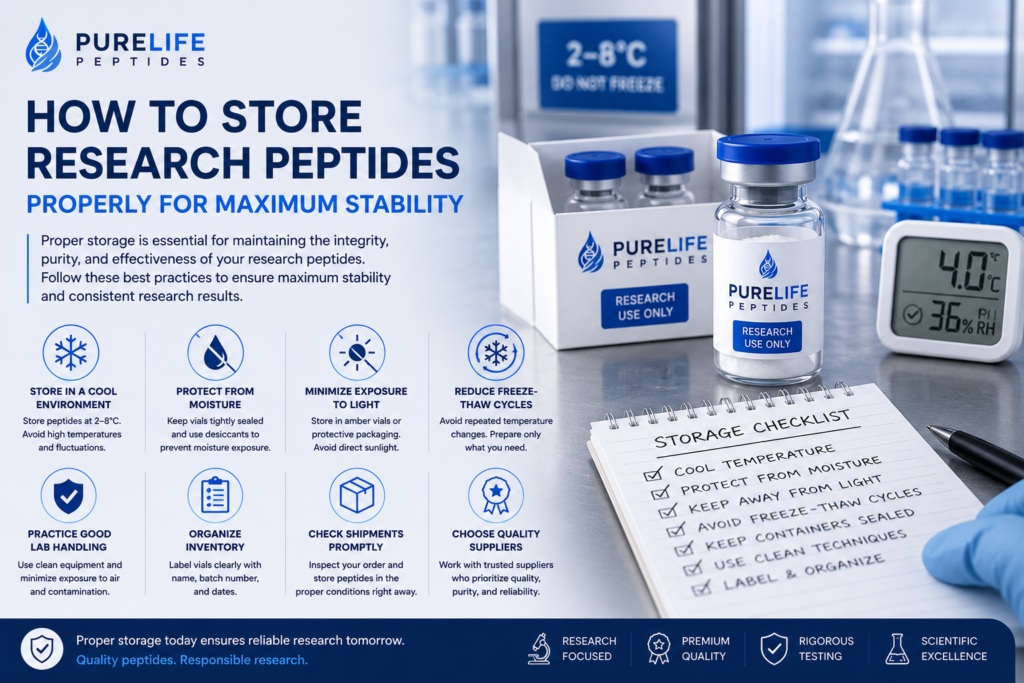
Store in a Cool Environment
Temperature is one of the most important factors affecting peptide stability.
Most laboratories recommend storing lyophilized research peptides in cool conditions to minimize molecular degradation over time. Elevated temperatures can accelerate chemical reactions that may reduce peptide integrity.
Maintaining a consistently cool storage environment helps preserve product quality and supports long-term stability for laboratory use.
Avoid exposing peptide containers to direct heat sources or prolonged room-temperature conditions whenever possible.
Protect Peptides from Moisture
Moisture is one of the primary threats to lyophilized peptides.
Exposure to humidity may initiate unwanted chemical changes that affect stability before the peptide is even prepared for laboratory use. To reduce this risk, peptide containers should remain tightly sealed until needed.
Many laboratories also use desiccants and moisture-resistant storage containers to help protect freeze-dried materials during long-term storage.
Limiting moisture exposure helps maintain product integrity throughout storage and handling.
Minimize Exposure to Light
Some peptide compounds may be sensitive to prolonged exposure to direct light, particularly ultraviolet (UV) radiation.
To help preserve stability, peptides are often stored in amber-colored vials or kept inside protective packaging until needed.
Keeping products away from direct sunlight and bright laboratory lighting may help reduce unnecessary environmental exposure.
Simple precautions can contribute to maintaining product quality over extended storage periods.
Reduce Freeze-Thaw Cycles
Repeated freezing and thawing may introduce unnecessary stress to peptide materials after preparation.
Many research laboratories prepare only the amount needed for immediate experiments while storing remaining material separately according to established laboratory protocols.
Reducing unnecessary handling and minimizing repeated temperature changes can help preserve consistency and reduce the risk of degradation.
Careful planning before laboratory work helps support efficient peptide management.
Practice Good Laboratory Handling Techniques
Proper storage extends beyond temperature control.
Good laboratory practices include:
- Using clean equipment when handling peptides
- Keeping containers tightly sealed
- Avoiding unnecessary exposure to air
- Preventing cross-contamination
- Clearly labeling containers with relevant information
- Maintaining organized storage systems
Attention to these details helps maintain laboratory efficiency while protecting valuable research materials.
Organize Inventory Carefully
Laboratories that maintain multiple peptide products benefit from organized inventory management.
Proper labeling allows researchers to quickly identify products and monitor storage dates without unnecessary handling.
Many laboratories organize peptide inventories by:
- Product name
- Batch number
- Date received
- Date opened
- Storage location
Good inventory practices reduce handling errors and improve laboratory workflow.
Shipping and Storage After Delivery
Proper peptide storage begins the moment products arrive.
After receiving an order, researchers should inspect packaging, verify product labels, and place materials into appropriate storage conditions as soon as practical.
Avoid leaving peptide shipments in warm vehicles, direct sunlight, or uncontrolled environments for extended periods after delivery.
Prompt storage helps maintain the quality established during manufacturing and shipping.
Choosing a Supplier That Prioritizes Quality
Storage practices are only one part of maintaining peptide quality.
Selecting a supplier committed to rigorous manufacturing standards, secure packaging, and professional handling procedures provides additional confidence in product consistency.
Reliable suppliers invest in quality control processes designed to preserve peptide integrity before products ever reach the laboratory.
Choosing trusted suppliers helps researchers focus on their work with greater confidence.
PureLife Peptides’ Commitment to Quality
At PureLife Peptides, we understand that product quality extends beyond manufacturing. From sourcing and quality control to packaging and fulfillment, every step of our process is designed to support the integrity of our research peptides.
Our products are carefully packaged and handled with professionalism to help ensure they arrive in excellent condition. We remain committed to providing researchers with premium-quality materials backed by dependable service and attention to detail.
Quality, consistency, and customer satisfaction remain the foundation of everything we do.
Final Thoughts
Proper storage is an essential component of responsible peptide handling and laboratory management. By protecting peptides from heat, moisture, light, contamination, and unnecessary handling, researchers can help preserve product stability and maintain confidence in their scientific work.
Developing good storage habits not only protects valuable research materials but also contributes to more consistent and reliable laboratory practices.
At PureLife Peptides, we believe that excellence begins with quality products and continues through proper handling, storage, and professional support—helping researchers maintain the highest standards in every project.
